
Viet Nam

Improving safety and health at every step of the coffee supply chain in Viet Nam
Viet Nam is a vibrant lower-middle-income economy that has achieved remarkable progress in social and economic development over the past three decades. The country is globally recognized as the world’s second-largest coffee producer and one of the fastest-growing exporters of agricultural products. With exports exceeding USD 5 billion annually, coffee remains a pillar of Viet Nam’s rural economy, generating jobs for over 600 000 workers and supporting the livelihoods of around 2.6 million people.

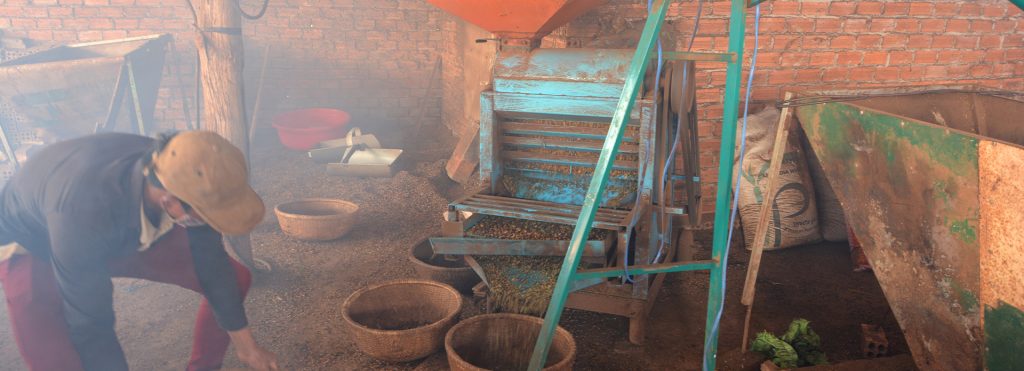


Coffee Supply Chain
Built on smallholder farms, the country’s coffee sector relies heavily on manual and highly seasonal work. Across cultivation, harvesting and processing, workers are exposed to ergonomic, chemical, biological and physical risks that can affect both their well-being and productivity. Informal employment is common, leaving many without written contracts or access to social protection, while seasonal income fluctuations add to financial pressure. Women, who make up a large share of the workforce, are often concentrated in lower-paid roles.
Our approach
The current phase of the project, implemented in partnership with Nestlé, works to improve safety, health and working conditions for women and men in coffee cultivation and processing by reducing exposure to occupational hazards, strengthening the application of OSH standards and supporting better compliance with national labour regulations. It also raises awareness of social protection, promotes gender equality in farming communities and helps address risks linked to seasonal work, informality and climate-related hazards.
Through targeted training, awareness raising, applied research and close cooperation with government institutions, workers’ and employers’ organizations, cooperatives and private-sector partners, the project supports practical and sustainable improvements in OSH management, labour practices and overall coffee supply chain resilience.
Progress
Workplace safety and labour practices in Viet Nam’s coffee-growing regions have been strengthened through training for more than 17,500 farmers, enhanced community-based capacity for peer-to-peer learning, and the introduction of practical occupational safety and health improvement measures.
640,000
coffee-farming
households benefiting
from project interventions